

Over 80 percent of american construction projects rely on contractors to guide projects from raw blueprints to finished buildings. Choosing the right contractor means more than just selecting a skilled workforce—it determines whether a project meets quality standards, stays on budget, and finishes on time. Understanding what makes contractors such an important part of every construction site helps property owners and developers avoid common mistakes, set realistic expectations, and achieve lasting results.
Table of Contents
- Defining Contractors In Construction Projects
- Types Of Contractors And Their Distinctions
- How Contractors Manage Renovation Processes
- Legal Duties And Industry Standards For Contractors
- Common Risks And Mistakes With Contractors
Key Takeaways
| Point | Details |
|---|---|
| Role of Contractors | Contractors are essential in construction, acting as project managers who coordinate various teams and ensure successful project delivery. |
| Types of Contractors | Understanding different contractor types—general, specialty, and subcontractors—is crucial for aligning expertise with project needs. |
| Legal Obligations | Contractors must adhere to strict legal requirements, including bidding transparency and compliance with safety regulations, to maintain industry standards. |
| Risk Management | Effective contractor selection and clear communication can mitigate risks such as budget overruns and quality control failures in construction projects. |
Defining Contractors in Construction Projects
In the dynamic world of construction, contractors play a pivotal role in transforming architectural blueprints into tangible structures. General contractors serve as the central orchestrators of complex building projects, coordinating multiple teams, trades, and resources to ensure successful project completion.
Contractors are professional construction professionals responsible for supervising and executing construction tasks across residential and commercial projects. According to research from Carnegie Mellon University, contractors can be categorized into different specialized roles:
- General Contractors: Oversee entire construction projects, managing subcontractors, scheduling, and overall project coordination
- Specialty Contractors: Focus on specific trades such as electrical, mechanical, plumbing, or carpentry work
- Installation Contractors: Often responsible for specific equipment or material installations
The scope of a contractor’s responsibilities extends far beyond simple labor. These professionals are crucial in managing project timelines, ensuring quality standards, controlling costs, and navigating complex regulatory requirements. Hiring the right contractor can mean the difference between a smoothly executed project and a potential construction nightmare.
Understanding the nuanced roles of contractors requires recognizing their multifaceted responsibilities. They are not just workers but project managers, problem solvers, and critical links between architectural designs and physical construction. From interpreting technical drawings to coordinating intricate logistical challenges, contractors transform abstract plans into real-world structures that meet both aesthetic and functional requirements.
Types of Contractors and Their Distinctions
Contractors in the construction industry represent a diverse ecosystem of specialized professionals, each bringing unique skills and capabilities to building projects. Choosing the right contractor requires understanding the nuanced differences between various contractor types and their specific operational scopes.
According to research from Pennsylvania State University, construction projects involve several primary contractor categories:
- General Contractors: Manage overall construction processes, coordinating multiple project aspects
- Specialty Contractors: Focus on specific trade skills like electrical, plumbing, or mechanical work
- Subcontractors: Perform specialized tasks under the general contractor’s supervision
- Vendor Contractors: Provide materials and equipment without typically performing on-site labor
The International Labor Organization identifies contractors by scale and capabilities, ranging from small-scale operations to large infrastructure specialists. Small-scale contractors typically handle minor repairs and maintenance with basic equipment, while medium-sized contractors undertake more complex building construction projects. Large-scale contractors possess substantial resources and advanced managerial skills, enabling them to execute extensive and intricate infrastructure developments.
Understanding these contractor distinctions is crucial for project owners. Each type brings specific expertise, resources, and operational approaches that can significantly impact project success. From residential renovations to massive commercial constructions, selecting contractors whose capabilities align with project requirements ensures efficient execution, quality workmanship, and successful outcomes.
How Contractors Manage Renovation Processes
Renovation processes demand intricate management and strategic coordination, with contractors serving as the central architects of project success. Hiring a renovation contractor requires understanding the complex layers of project management that professionals navigate to transform spaces effectively.
According to construction management research, contractors play a critical role in managing renovation processes through several key strategies:
- Project Planning: Developing comprehensive project blueprints
- Task Coordination: Synchronizing multiple specialized teams
- Safety Management: Ensuring workplace safety and regulatory compliance
- Resource Allocation: Strategically distributing labor, materials, and equipment
- Subcontractor Management: Selecting and supervising specialized trade professionals
The renovation management process typically involves multiple intricate stages. Contractors begin by conducting thorough site assessments, evaluating existing conditions, and developing detailed project scopes. They create precise timelines, establish budget parameters, and identify potential challenges before actual construction begins. Specialized subcontractors are carefully selected to address specific technical requirements, ensuring each aspect of the renovation receives expert attention.

Professional contractors transform renovation projects from conceptual designs into tangible realities through meticulous planning and execution. Their ability to coordinate complex workflows, manage unexpected challenges, and maintain high-quality standards distinguishes successful renovations from mediocre implementations. By integrating technical expertise, strategic planning, and adaptive problem-solving, contractors ensure that renovation projects meet both aesthetic aspirations and functional requirements.
Legal Duties and Industry Standards for Contractors
Contractors operate within a complex framework of legal obligations and industry standards that govern every aspect of their professional practice. Understanding remodeling contracts is fundamental to navigating the intricate legal landscape of construction and renovation projects.
The public contracting environment imposes strict regulatory requirements that ensure transparency and fairness. Key legal duties for contractors include:
- Bidding Transparency: Following standardized bidding processes
- Contract Compliance: Adhering to published selection standards
- Regulatory Adherence: Meeting local, state, and federal construction regulations
- Safety Compliance: Maintaining workplace safety standards
- Professional Licensing: Maintaining current professional certifications
Industry standards mandate that contractors strategically utilize resources while meeting both corporate and project objectives. This involves comprehensive documentation, precise project planning, and maintaining rigorous quality control mechanisms. Contractors must demonstrate their ability to balance technical expertise with legal and ethical requirements, ensuring that every project meets established professional benchmarks.
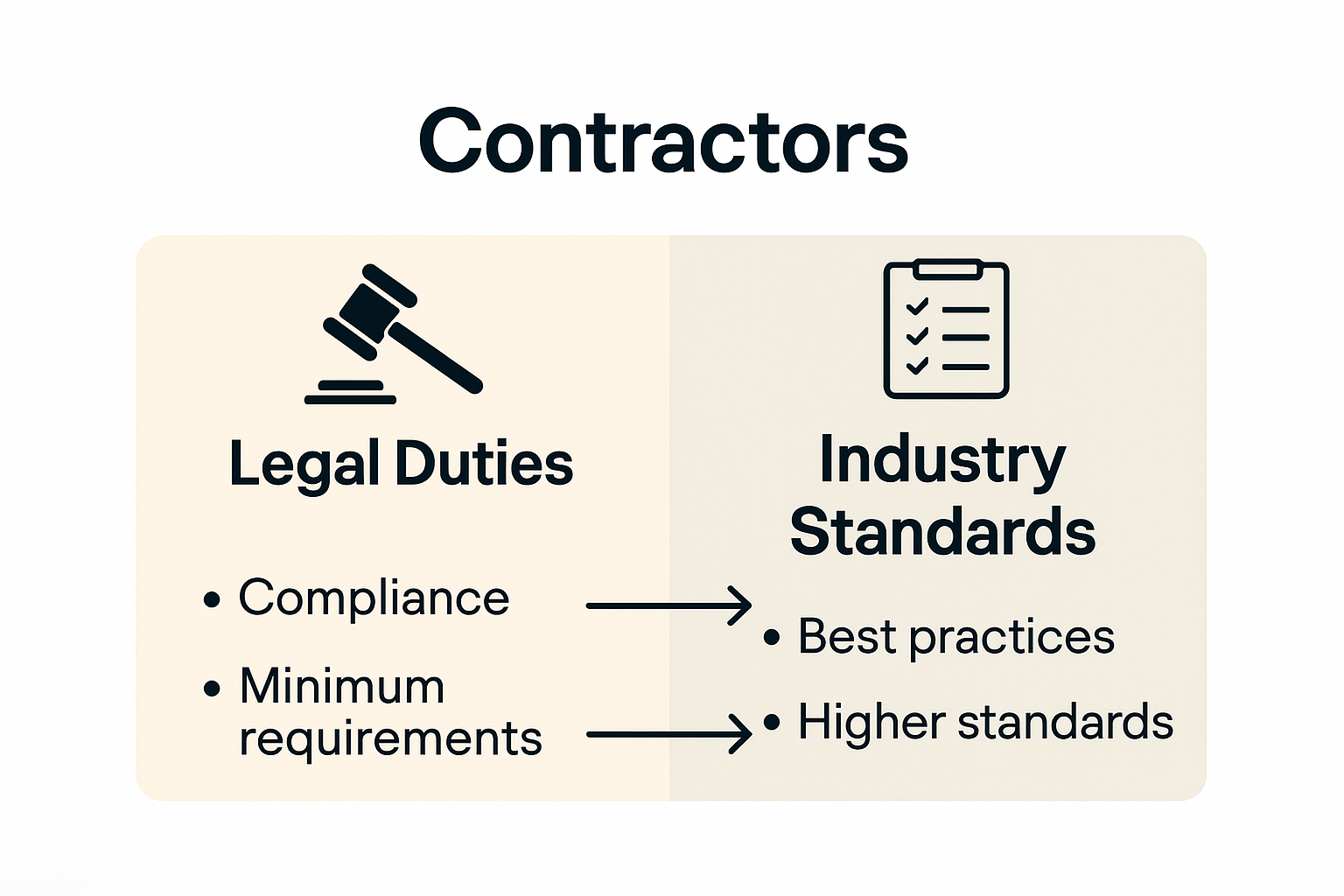
The legal framework surrounding contractors extends beyond mere contractual obligations. It encompasses professional conduct, financial accountability, and the protection of client interests. Successful contractors distinguish themselves by not just meeting minimum legal requirements, but by establishing trust through transparent practices, consistent communication, and a commitment to exceeding industry standards.
Common Risks and Mistakes With Contractors
Navigating the complex world of construction requires a strategic approach to mitigating potential risks associated with contractor selection and project management. Hiring a quality renovation contractor demands careful evaluation to prevent costly mistakes that could derail your project.
Research highlights several critical risks in contractor selection and project execution:
- Qualification Mismatches: Hiring contractors without proper expertise
- Communication Breakdowns: Inadequate project communication channels
- Contractual Ambiguities: Poorly defined project scopes and expectations
- Budget Overruns: Insufficient financial planning and cost controls
- Quality Control Failures: Lack of rigorous performance monitoring
Professional research indicates that unqualified contractor selection can dramatically impact project outcomes. The consequences extend beyond simple inconvenience, potentially resulting in significant project delays, unexpected cost increases, and substandard work quality. Misalignment between project delivery systems and contracting strategies introduces complex risks such as miscommunication, potential contractual disputes, and operational inefficiencies.
Successful project management requires proactive risk mitigation strategies. Contractors must be thoroughly vetted, with comprehensive background checks, verified credentials, and a demonstrated track record of successful project completions. Clients should prioritize transparent communication, detailed contractual agreements, and continuous performance monitoring to minimize potential risks and ensure project success.
Master Your Construction Project with Trusted Contractor Expertise
Understanding the complex role of contractors is essential to avoid costly mistakes and delays in your renovation or building project. This article reveals critical challenges such as managing timelines, ensuring legal compliance, and coordinating multiple trades. If you want a reliable partner who excels in managing these details with precision and professionalism, look no further.
At AstroTech Construction, we specialize in residential and commercial renovations throughout the Dallas – Fort Worth Metroplex. Our experienced team acts as your dedicated general contractor, expertly handling everything from full home remodeling to roof replacement and storm damage repair. We emphasize quality assurance, clear communication, and strict adherence to legal and safety standards so you can enjoy peace of mind every step of the way.
Ready to turn your vision into reality without the usual headache? Discover how our comprehensive solutions provide seamless project execution and superior results. Take the first step by exploring our step-by-step guide to hiring contractors to understand how we secure the best subcontractors and manage every detail. Then, visit our main site at AstroTech Construction to schedule a consultation.

Choose a contractor who transforms challenges into successful outcomes. Contact us today to ensure your next construction or renovation project is expertly managed from start to finish.
Frequently Asked Questions
What are the main types of contractors in construction?
Contractors in construction are typically categorized into general contractors, specialty contractors, subcontractors, and vendor contractors, each specializing in different aspects of the building process.
What roles do general contractors play in construction projects?
General contractors oversee entire construction projects, coordinating various teams, managing schedules, and ensuring compliance with regulations while maintaining quality and controlling costs.
How can I effectively manage risks when hiring a contractor?
To manage risks when hiring a contractor, ensure thorough vetting, establish clear communication channels, create detailed contractual agreements, and monitor performance closely throughout the project.
What legal obligations do contractors need to fulfill?
Contractors must adhere to legal obligations such as maintaining bidding transparency, complying with contracts, meeting safety standards, obtaining necessary licenses, and following construction regulations.