
Sustainable construction is transforming how renovations are planned across Dallas-Fort Worth. For local homeowners and property managers, the challenge lies in finding approaches that reduce environmental impact and deliver real economic value. By embracing techniques such as life-cycle thinking and using recycled or bio-based materials, you can achieve renovations that are resource-efficient and support long-term property performance. Discover how sustainable practices offer practical solutions for building resilience while prioritizing both cost savings and ecological responsibility.
Table of Contents
- Defining Sustainable Construction Practices
- Key Principles And Sustainable Materials
- Types And Examples Of Sustainable Building
- Costs, ROI, And Market Value Implications
- Legal Requirements And Compliance Standards
- Common Pitfalls And How To Avoid Them
Key Takeaways
| Point | Details |
|---|---|
| Sustainable Construction Principles | Focus on reducing environmental impact, promoting resource efficiency, and fostering social responsibility throughout the entire lifecycle of a building. |
| Economic Benefits | Sustainable construction may have higher initial costs, but it offers significant long-term savings and increased property value. |
| Regulatory Compliance | Property owners must navigate an evolving landscape of legal requirements and standards aimed at promoting environmental responsibility. |
| Collaboration is Key | Successful sustainable construction relies on effective teamwork and communication among stakeholders to address challenges and implement innovative solutions. |
Defining Sustainable Construction Practices
Sustainable construction represents a holistic approach to building design and execution that prioritizes environmental responsibility, economic efficiency, and social well-being. At its core, this practice focuses on minimizing negative impacts on the natural environment while creating structures that support long-term human needs. Sustainable construction methods integrate multiple dimensions beyond traditional building techniques.
The fundamental principles of sustainable construction encompass several critical elements:
- Reduced Environmental Impact: Minimizing carbon emissions and resource consumption
- Material Efficiency: Using recycled, renewable, and locally sourced materials
- Energy Conservation: Implementing design strategies that reduce overall energy requirements
- Waste Reduction: Implementing comprehensive recycling and reuse strategies
- Long-Term Performance: Designing buildings with extended lifecycle and adaptability
These practices go far beyond simple green building techniques. Sustainable construction considers the entire lifecycle of a structure – from initial design through construction, operation, maintenance, and eventual deconstruction. This comprehensive approach requires collaboration among architects, engineers, contractors, and local stakeholders to develop integrated solutions that balance environmental stewardship with practical functionality.
Sustainable construction isn’t just about reducing negative impacts – it’s about creating positive, regenerative building environments that support both human and ecological systems.
Economic Benefits are equally significant. By reducing energy consumption, minimizing waste, and utilizing efficient materials, sustainable construction can provide substantial long-term cost savings for property owners. Techniques like proper insulation, solar integration, and water reclamation systems can dramatically lower ongoing operational expenses.
Pro tip: When considering sustainable construction, start by conducting a comprehensive energy audit to identify specific opportunities for efficiency and environmental improvement in your property.
Key Principles and Sustainable Materials
Sustainable construction relies on a comprehensive set of principles that transform traditional building practices into environmentally responsible and economically efficient processes. Key principles in sustainable construction encompass a holistic approach that considers environmental, social, and economic dimensions throughout a building’s entire lifecycle.
The core principles of sustainable construction include:
- Resource Efficiency: Minimizing waste and maximizing material utilization
- Life-Cycle Thinking: Evaluating environmental impacts from material extraction to demolition
- Environmental Stewardship: Reducing carbon footprint and ecological disruption
- Social Responsibility: Creating healthy, safe, and inclusive building environments
- Economic Optimization: Balancing initial costs with long-term sustainability benefits
Sustainable materials play a crucial role in implementing these principles. Modern construction now prioritizes materials that offer significant environmental advantages, such as:
- Recycled steel and aluminum
- Bio-based composites
- Locally sourced natural materials
- Reclaimed wood and timber
- Advanced low-carbon concrete alternatives
Sustainable materials are not just about environmental performance – they represent a fundamental reimagining of how we approach construction and resource utilization.
Technological innovations are continuously expanding the potential of sustainable materials. Emerging building material technologies are creating new opportunities for reducing energy consumption and minimizing carbon footprint across building lifecycles. These advances include sophisticated insulation products, self-healing concrete, and carbon-sequestering building components that actively contribute to environmental restoration.
Pro tip: When selecting sustainable materials, prioritize locally sourced options that reduce transportation emissions and support regional economic development.
Types and Examples of Sustainable Building
Global sustainable building practices represent a dynamic approach to construction that goes far beyond traditional building methods. These innovative approaches prioritize environmental performance, energy efficiency, and holistic resource management across residential, commercial, and industrial structures.
Sustainable building types can be categorized into several key classifications:
- Net-Zero Energy Buildings: Structures that produce as much energy as they consume
- Green Buildings: Environmentally responsible and resource-efficient throughout their lifecycle
- Passive House Designs: Ultra-low energy buildings with exceptional thermal performance
- Adaptive Reuse Structures: Repurposing existing buildings to minimize new construction
- Modular and Prefabricated Sustainable Constructions: Reducing waste through precision manufacturing
Sustainable building is not just about reducing environmental impact – it’s about creating intelligent, responsive environments that support human and ecological well-being.
European sustainable building initiatives demonstrate remarkable diversity in implementation. Practical examples include deeply renovated historic buildings that preserve cultural heritage while incorporating modern energy-efficient technologies, community-led housing projects that prioritize social sustainability, and innovative urban developments that integrate circular economy principles.
Technological advancements are continuously expanding sustainable building possibilities. Modern sustainable constructions now incorporate sophisticated features like:
Here’s how different sustainable building types address key performance areas:
| Building Type | Energy Efficiency | Resource Use | Social Value |
|---|---|---|---|
| Net-Zero Energy | Entirely self-powered | Often use renewables | Lower utility costs |
| Green Building | Highly efficient systems | Low-impact materials | Healthier environments |
| Passive House | Ultra-low consumption | Advanced insulation | Comfort-focused design |
| Adaptive Reuse | Moderate improvement | Preserves materials | Heritage preservation |
| Modular & Prefab Sustainable | Reduced waste | Precision-optimized | Fast, flexible delivery |
- Solar panel integration
- Rainwater harvesting systems
- Smart building management technologies
- Advanced thermal insulation
- Carbon-sequestering building materials
Pro tip: When exploring sustainable building options, conduct a comprehensive energy audit to identify the most impactful sustainable strategies for your specific property.
Costs, ROI, and Market Value Implications
Economic implications of sustainable construction reveal a complex financial landscape that goes beyond traditional cost calculations. While initial investments in sustainable building practices may appear higher, the long-term financial benefits create a compelling economic argument for property owners and developers.
Key financial considerations for sustainable construction include:
- Initial Investment Costs: Typically 2-7% higher than conventional construction
- Energy Savings: Potential 30-50% reduction in utility expenses
- Maintenance Expenses: Lower long-term maintenance and replacement costs
- Property Value Appreciation: Increased market value and marketability
- Tax Incentives: Potential tax credits and government rebates
Sustainable construction is not an expense, but a strategic financial investment that delivers measurable economic returns over time.
Lifecycle cost analysis of sustainable buildings demonstrates significant financial advantages. Sustainable properties consistently show higher market values, with green-certified buildings often commanding premium prices and attracting more discerning tenants and buyers. These economic benefits stem from:
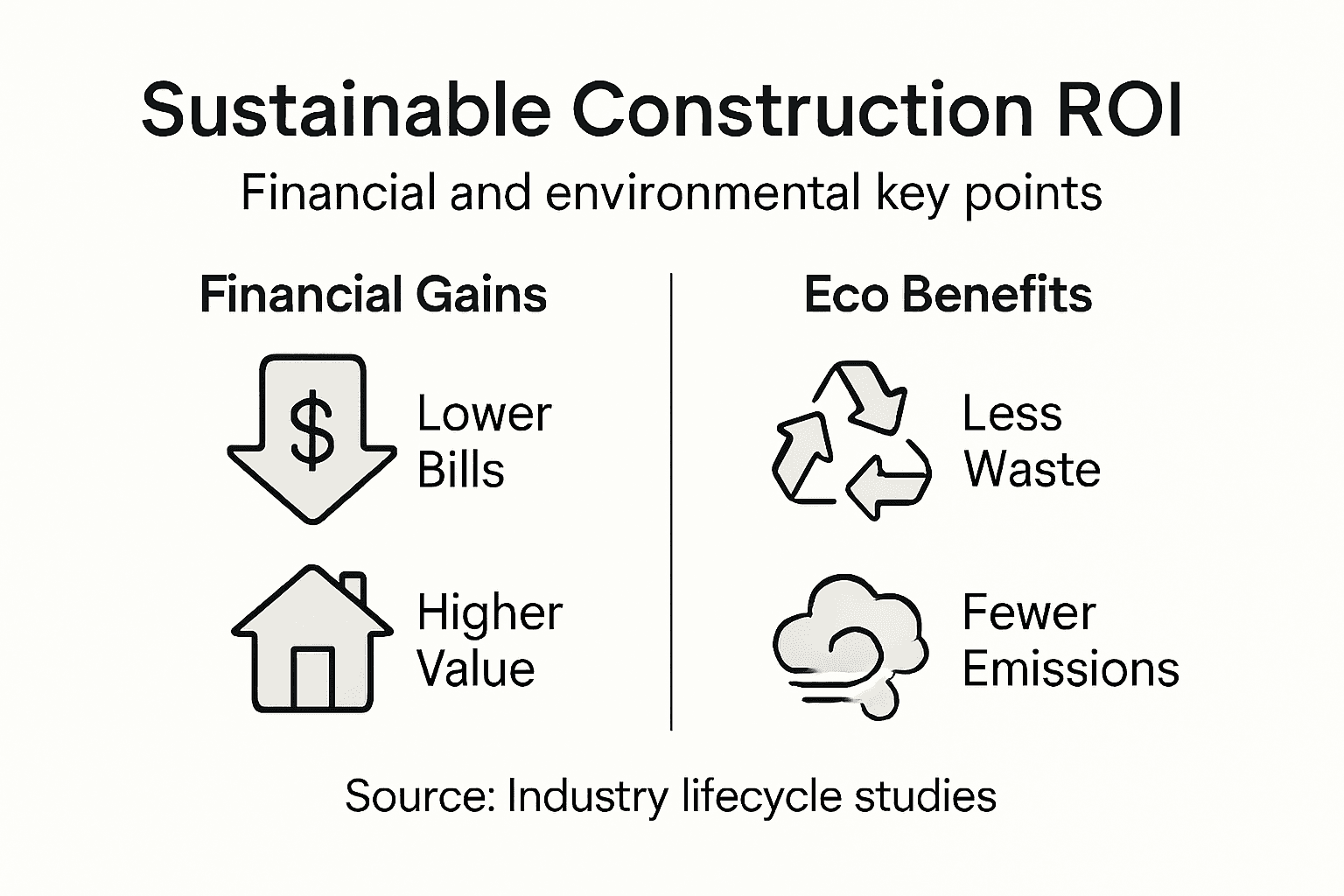
The following table summarizes the economic advantages of sustainable construction over time:
| Cost Aspect | Conventional Building | Sustainable Building | Long-Term Impact |
|---|---|---|---|
| Initial Investment | Lower upfront cost | 2-7% higher initial cost | Offset by savings |
| Utility Expenses | Higher monthly bills | 30-50% lower costs | Consistent savings |
| Maintenance | More frequent repairs | Reduced frequency | Lower lifecycle costs |
| Property Value | Standard appreciation | Higher appreciation | Enhanced resale potential |
- Reduced operational costs
- Enhanced energy efficiency
- Lower environmental impact
- Improved indoor environmental quality
- Alignment with emerging market sustainability trends
Modern property investors increasingly recognize sustainable construction as a sophisticated financial strategy. Beyond immediate cost considerations, these investments generate substantial long-term economic value through improved performance, reduced risk, and alignment with evolving environmental regulations.
Pro tip: When evaluating sustainable construction investments, calculate potential savings using comprehensive lifecycle cost analysis rather than focusing solely on upfront expenses.
Legal Requirements and Compliance Standards
Global sustainable construction frameworks are rapidly evolving, creating a complex landscape of legal requirements and compliance standards that property owners must navigate carefully. These regulations aim to drive environmental responsibility, energy efficiency, and sustainable development across the construction industry.
Key legal considerations for sustainable construction include:
- Building Energy Codes: Mandatory efficiency standards for new and renovated structures
- Environmental Impact Assessments: Required documentation of ecological consequences
- Green Building Certifications: Voluntary but increasingly influential standards
- Zoning Regulations: Local requirements for sustainable design elements
- Carbon Emission Restrictions: Emerging legal limits on construction-related emissions
Legal compliance in sustainable construction is not just about meeting minimum standards, but about proactively contributing to environmental stewardship.
Regulatory challenges in sustainable construction reveal significant variations across different jurisdictions. Some regions have comprehensive, mandatory sustainability requirements, while others rely on voluntary guidelines and incentive-based approaches. This regulatory diversity creates both opportunities and challenges for property developers and owners seeking to implement sustainable practices.
The most progressive jurisdictions are implementing comprehensive strategies that include:
- Mandatory energy performance certificates
- Financial incentives for green building
- Stringent building code updates
- Penalties for non-compliance
- Support for innovative sustainable technologies
Pro tip: Consult local building authorities and sustainability experts to understand the specific legal requirements and potential incentives for sustainable construction in your area.
Common Pitfalls and How to Avoid Them
Sustainable construction challenges represent complex obstacles that can undermine even the most well-intentioned green building projects. Understanding these potential pitfalls is crucial for property owners and developers seeking to implement truly effective sustainable strategies.
Common challenges in sustainable construction include:
- Inadequate Stakeholder Collaboration: Fragmented communication between project teams
- Limited Technical Expertise: Insufficient knowledge about sustainable technologies
- Budget Constraints: Perceived high initial investment costs
- Resistance to Innovation: Traditional mindsets blocking progressive approaches
- Complex Regulatory Environments: Navigating changing sustainability requirements
Successful sustainable construction requires proactive problem-solving and a holistic approach to project development.
Strategies for overcoming sustainability barriers emphasize the importance of comprehensive planning and continuous education. Key approaches to mitigate these challenges include:
- Developing clear sustainability guidelines
- Investing in team training and capacity building
- Utilizing integrated project delivery methods
- Implementing robust data management systems
- Fostering cross-sector collaboration
Technological advancements and strategic planning can significantly reduce risks associated with sustainable construction. Property owners should prioritize comprehensive feasibility studies, engage sustainability experts early in the project, and maintain flexibility to adapt to evolving green building standards.
Pro tip: Create a dedicated sustainability task force within your project team to proactively identify and address potential challenges throughout the construction process.
Transform Your Property with Sustainable Construction Solutions
Sustainable construction is vital for reducing environmental impact while enhancing the long-term value and efficiency of your home or business. If you are facing challenges like high energy bills, outdated materials, or the need to comply with evolving building codes, embracing sustainable building principles can provide lasting benefits such as energy savings, reduced maintenance costs, and improved indoor comfort. By integrating advanced eco-friendly materials and design strategies highlighted in the article, you can achieve an environmentally responsible renovation with economic advantages.
At Astrotech Construction, we specialize in turning these sustainable construction goals into reality for Dallas – Fort Worth homeowners and business owners. Whether you need a full home remodeling, kitchen and bathroom upgrades, roof replacement, or siding improvements, we use quality materials and expert workmanship to maximize your property’s sustainability and market value. Our team understands the importance of aligning modern sustainable practices with your unique needs and budgets.
Ready to reduce your carbon footprint while increasing your property’s efficiency and appeal
Explore how Astrotech Construction’s services can help you implement sustainable construction strategies. Schedule a consultation today to take the first step toward a greener, more cost-effective property. Visit our website now at https://astrotechconstruction.com to learn more and get started on your sustainable renovation journey.
Frequently Asked Questions
What are the key benefits of sustainable construction for my property?
Sustainable construction offers several benefits, including reduced energy consumption, lower utility costs, enhanced property value, and longevity of structures. These advantages contribute to improved financial performance over time.
How does sustainable construction impact environmental performance?
Sustainable construction minimizes the environmental impacts of buildings by reducing carbon emissions, maximizing resource efficiency, and promoting the use of renewable materials. It focuses on long-term ecological benefits rather than just short-term gains.
What types of materials are considered sustainable in construction?
Sustainable materials include recycled steel and aluminum, bio-based composites, reclaimed wood, and low-carbon concrete alternatives. These materials help reduce the environmental footprint of construction projects and promote resource efficiency.
How can sustainable construction affect my property’s market value?
Properties built or renovated using sustainable construction practices often appreciate faster and command higher prices in the market due to their energy efficiency, lower operating costs, and appeal to environmentally conscious buyers.
Recommended
- What Is Sustainable Remodeling and Why It Matters – Astrotech Construction
- What Is Sustainable Remodeling and Why It Matters – Astrotech Construction
- Why Renovate Commercial Property: Boost Value and Success – Astrotech Construction
- Why Upgrade Building Exteriors: Boost Value and Comfort – Astrotech Construction